
 Study MBBS In Armenia
  Study MBBS In Kyrgyzstan
  Study MBBS In China
  Study MBBS In Philippines
  Study MBBS In Ukraine
  Study MBBS In Nepal
  Study MBBS In Russia
  Study MBBS In Kazakhstan
  Study MBBS In Georgia
  Study MBBS In Uzbekistan
  Study MBBS In Bangladesh
 Study MBBS in Russia for Indian Students 2026-27
Russia has become a popular choice for Indian students looking to study MBBS at a cost-effective price while getting a globally recognized degree.Each year, many medical students opt for Russian medical universities because they offer low tuition fees, education in English, modern facilities, and degrees that are accepted worldwide by organizations like NMC and WHO.These universities are known for providing good quality education, hands-on clinical training, and internationally accepted medical qualifications at reasonable prices.
Students often compare Russia with other affordable options like studying MBBS in Kazakhstan, MBBS in Georgia, and MBBS in Bangladesh h before deciding which country's medical university to join.
DoctorBano, a MBBS abroad consultancy, offers end-to-end guidance to students for easy admission to MBBS. We help in choosing the best Russian medical university sanctioned by NMC, document verification, admission help, visa help, pre-departure advice to Russia, and students’ guidance after reaching there. Our team is dedicated to providing a clear and hassle-free admission.
With transparent counselling and personalized support, DoctorBano helps students and parents make informed decisions about pursuing amedical education in Russia.
Quick Overview for Studying MBBS in Russia for Indian students
| Particulars | Details |
| Course Duration | 6 years |
| Eligibility | 50% PCB + NEET |
| Medium of Instruction | English |
| Living Cost | ₹13,000 per month (Approx.) |
| Recognitions | NMC, WHO |
| Average Fees | ₹15–40 Lakhs |
| IELTS/TOEFL | Not Required |
| Intake | September |
NMC Guidelines for MBBS Abroad 2026: FMGL Requirements for Indian Students
Indian students who are planning to study MBBS abroad in 2026 should take time to understand the rules applicable to foreign medical graduates. As per the Foreign Medical Graduate Licentiate (FMGL) Regulations, 2021, the National Medical Commission (NMC) has laid down certain guidelines. Students are advised to check the latest NMC updates, rules and advice before applying to a medical university.
When you are considering studying MBBS in Russia, it is important to look at the specific university and program you are interested in, and not just the general terms like “NMC approved”. Check that the program meets all NMC requirements, duration of the course, curriculum, language of instruction, clinical training, internship and if the degree will be recognized.
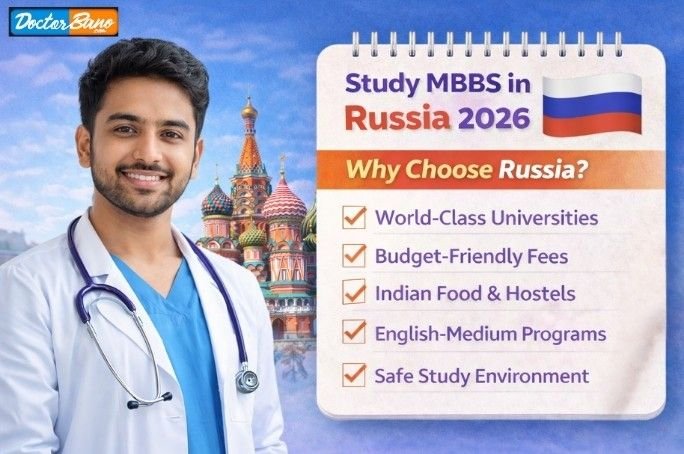
Why Study MBBS in Russia: What Sets It Apart?
Russia has been training international medical students for more than 60 years, and its MBBS program is organized in a way that is different from other countries.It's important to understand these differences before deciding where to study abroad.
Tuition and cost structure
The annual fee structure of the Russian medical universities usually varies between Rs 15 lakh to Rs 40 lakh depending on the city and university ranking. Moscow and St.Petersburg universities are generally more expensive, while universities in Kazan, Volgograd or Orenburg are more affordable.In some private colleges in India there is a management quota or capitation fees . But your admission here is based only on your NEET score.
Regulatory standing
Check the official list from NMC and select your university.Not all Russian medical universities have accreditation at the moment, and some of them have changed their accreditation status in recent years.For the university’s current status, check directly on the NMC website.
Curriculum and licensing path
International students have 2-3 years of teaching in the English language. Russian language classes are also conducted simultaneously.This allows students to learn Russian so they are able to speak with patients during their clinical placements.This is how MBBS courses are generally organized in Russian medical universities.After you finish your degree, to work as a doctor in India you will have to pass the FMGE (or NExT, as and when it comes into play).So, it’s better to see past FMGE results of the university rather than just the general reputation.
Clinical exposure
Many Russian medical schools are attached to teaching hospitals rather than using separate hospitals, giving students earlier and more regular experience than in some other places where they study abroad.
There are groups of Indian students in cities like Kazan, Ufa and Volgograd. They have Indian style messes, grocery shops and student groups to help Indian students settle in. But the availability of these facilities varies from city to city. Therefore, it is better to ask about the city than the university.
Living conditions for Indian students
Cities like Kazan, Ufa, and Volgograd have established Indian student communities with Indian mess facilities, grocery access, and student associations that help with the adjustment — this is more developed in some cities than others, so it's worth asking specifically about the city, not just the university.
A caveat worth including
Winters are tough, temperatures can stay below freezing for a long time, and this is something real that students from India need to get used to.
NMC Eligibility Certificate (EC) — What Indian Students Need to Know
The Eligibility Certificate (EC) is given by the National Medical Commission's Ethics and Medical Registration Board (EMRB).It is required for Indian citizens and Overseas Citizens of India (OCIs) who have studied medicine abroad and want to take the FMGE (or the new NExT) exam in India.
Here are the important points about the EC:
- The EC is given based on rules set by the NMC, which control who can study medicine at foreign universities. It is also needed to take the FMGE/NExT exam.
- The NMC opens the EC application period once each year, usually in the first few months of the year, through its official website.
- The exact dates change every year, so it's important to check the latest notice instead of using last year's dates.
- In recent years, the NMC has sometimes opened the application period again for a short time if there were technical problems with the website. But this is not guaranteed, so it's best to apply well before the official deadline.
- Candidates must apply themselves.
- The NMC advises against using agents or others to fill out the form because mistakes can cause the application to be rejected.
If someone doesn't have a valid EC, they can't take the FMGE/NExT exam and therefore can't register to practice medicine in India, no matter how good their grades were abroad.
What DoctorBano helps with
We keep a track on the NMC's EC application dates every year and help students with preparation of their documents, understanding of photo requirements, and submitting the form. This helps prevent the usual mistakes that can cause applications to be rejected. The NMC sets the EC application timeline and requirements each year. Before applying, always check the current year's dates and guidelines on the official NMC website.
Top NMC Approved Medical Universities in Russia
| University Name | City | Approx Fees | Recognition |
| Kazan State Medical University | Kazan | ₹25 - ₹38 Lakhs | NMC & WHO |
| Kazan Federal University | Kazan | ₹25 - ₹38.5 Lakhs | NMC & WHO |
| Tver State Medical University | Tver | ₹18 - ₹20 Lakhs | NMC & WHO |
| Bashkir State Medical University | Ufa | ₹27 - ₹28 Lakhs | NMC |
| North Ossetian State Medical University | Vladikavkaz | ₹19.23 - 23.50 Lakhs | NMC & WHO |
| Sevastopol State Medical University | Sevastopol | ₹20 - ₹24 Lakhs | WHO |
Each university listed above offers unique strengths in terms of academic excellence, research opportunities, hospital-based clinical exposure, and international recognition. Students should compare tuition fees, city, hostel facilities, internship opportunities, and NMC compliance before making their final decision.
MBBS in Russia Syllabus for Indian Students (2026)
The MBBS course in Russia is designed to provide learners with a strong foundation in medical science and enough practical clinical experience.The course is six years long, five years of study and one year of mandatory clinical practice. This is the standard structure used by the best Russian medical schools.The course is divided into three main sections: Pre-Clinical, Para-Clinical and Clinical, where students learn the theory and practical skills required in medicine.
Year-Wise MBBS Syllabus in Russia
| Year | Major Subjects |
| 1st Year | Human Anatomy, Histology, Medical Biology, Biochemistry, Medical Physics, Latin, Russian Language for Medical Communication |
| 2nd Year | Physiology, Microbiology, Immunology, Pathology, Biochemistry, Philosophy, Russian Language |
| 3rd Year | Pharmacology, Pathophysiology, General Pathology, Clinical Diagnostics, Internal Medicine (Introduction), General Surgery |
| 4th Year | Internal Medicine, General Surgery, Pediatrics, Neurology, Psychiatry, Radiology, Public Health, Infectious Diseases |
| 5th Year | Obstetrics & Gynecology, ENT, Ophthalmology, Oncology, Dermatology, Urology, Orthopedics, Emergency Medicine, Clinical Rotations |
| 6th Year | Advanced Clinical Training, Internal Medicine, Surgery, Pediatrics, Obstetrics & Gynecology, Emergency Medicine, Intensive Clinical Internship in Teaching Hospitals |
Key Features of the MBBS Curriculum in Russia
- Duration: 6 Years (including compulsory clinical internship)
- Medium of Instruction: English at most universities for international students, with Russian language training for hospital communication.
- Clinical Exposure: Begins from the third year and increases significantly during the final years through rotations in affiliated teaching hospitals.
- Practical Learning: Includes laboratory sessions, simulation-based learning, patient case discussions, ward postings, and hospital-based clinical practice.
- Research Opportunities: Many Russian medical universities encourage students to participate in medical research, seminars, conferences, and scientific projects.
MBBS in Russia Fees Structure 2026
Compared to many private medical colleges in India, studying MBBS in Russia offers excellent value for money. Besides affordable tuition fees, students also benefit from reasonably priced accommodation, low living expenses, and access to well-equipped teaching hospitals, making the overall investment much more economical.
| Expense Type | Approx Cost |
| Tuition Fees | ₹2.5–6 Lakhs/year |
| Hostel Fees | ₹50,000–1 Lakh/year |
| Food Expenses | ₹10,000–15,000/month |
| Medical Insurance | ₹10,000–20,000/year |
| Visa Extension | ₹5,000–10,000/year |
The overall cost of medical education in Russia usually ranges between ₹15 Lakhs and ₹40 Lakhs depending on the university selected.
Eligibility Criteria for MBBS in Russia 2026
Candidates must meet the following eligibility criteria to apply for MBBS admission in Russia for the 2026 intake.
Age Requirement:
Students must be a minimum of 17 years old by 31st December prior to their planned year of starting.
Education Qualification:
- Applicants must complete Class 12 with Physics, Chemistry, and Biology as compulsory subjects.
- Minimum 50% marks in PCB for General category.
- Minimum 40% marks for reserved category students.
NEET Qualification:
Students who are willing to pursue a Medical Degree in Russia must take the NEET exam and acquire passing scores to get their degree recognized in India.
English Medium Requirement :
The entire MBBS course, including internship, must be taught in English medium according to NMC guidelines.
Course Duration Requirement:
-
The medical program must include:
- Minimum 54 months (4.5 years) academic study
- Plus 12 months internship
- Internships must be completed in the same university/hospital abroad.
University Approval:
- Students should choose universities recognized by:
- National Medical Commission
- World Health Organization
- Non-compliant universities may create problems for FMGE/NExT eligibility in India.
MBBS Admission Process in Russia
Check Eligibility:
- 50% marks in PCB (40% for reserved category)
- NEET qualified
- Minimum age: 17 years
Choose University
Select NMC & WHO approved Russian medical university
Submit Documents
- 10th & 12th mark sheets
- NEET scorecard
- Passport copy
- Photos & medical reports
Get Admission Letter
The university sends admission and invitation letters.
Apply for Student Visa
Submit passport, invitation letter, and medical documents.
Pay Fees
Pay tuition fee and hostel charges.
Fly to Russia
Complete university registration and hostel admission.
Start MBBS
Course duration: 6 years in English medium.
Documents Required for MBBS in Russia
The following documents are required at the the time of Russia MBBS Admission:
- 10th marksheet
- 12th marksheet
- NEET scorecard
- Passport
- Passport-size photos
- Birth certificate
- Medical certificate
- HIV test report
- Migration certificate
- Admission letter
- Invitation letter
- Student visa
Is MBBS in Russia Valid for Indian Students?
A medical degree from Russia equivalent to MBBS does not automatically make you eligible to practice medicine in India. Indian students planning to return to India after studying MBBS abroad should ensure their university and program meet the criteria set by the NMC Foreign Medical Graduate Licentiate (FMGL).
Before applying, students are advised to review information regarding the length of the course, the subjects covered, the language of instruction, the clinical training offered and the structure of the internship.They also need to verify that their degree is recognized.
So students need to check that they will be studying at their university which is “NMC approved” and meets NMC/FMGL standards prior to them starting their studies.
Difference Between MBBS in India and MBBS in Russia
| Factors | MBBS in India | MBBS in Russia |
| Admission | Highly competitive | Easier |
| Fees | Very expensive in private colleges | Affordable |
| Donation | Often required | No donation |
| Duration | 5.5 Years | 6 Years |
| Medium | English | English |
| NEET | Mandatory | Mandatory |
| Hostel | Available | Available |
| Recognition | NMC approved | Many universities NMC approved |
| Practice in India | Direct | FMGE/NExT required |
FMGE/NExT Preparation for Indian Students
If you are an Indian student interested in studying MBBS abroad, you should be aware of licensing rules in India before selecting a medical college.After they complete their degree abroad, they need to follow the guidelines of the National Medical Commission (NMC) and clear the licensing exam for foreign doctors.
Students who want to go for MBBS in Russia, Kazakhstan, Georgia, Uzbekistan, Kyrgyzstan or Bangladesh must select an NMC approved university in the beginning. The right decision regarding the university, course structure, language of teaching, internship and clinical training can have a significant impact on their future ability to get licensed in India.
Benefits of Early FMGE/NExT Preparation
- Builds a Strong Medical Foundation: Studying core medical subjects thoroughly from the first year can make future licensing-exam preparation easier.
- Improves Clinical Understanding: Regular clinical exposure and practical learning help students develop stronger diagnostic and clinical reasoning skills.
- Makes Final-Year Revision Easier: Consistent preparation throughout the MBBS course reduces the pressure of completing the entire syllabus shortly before the examination.
- Helps Students Understand Indian Licensing Requirements: Students can plan their medical education according to the applicable NMC guidelines for MBBS abroad and understand important requirements before admission.
- Supports Better Career Planning: Early preparation can help students plan for licensing in India and explore postgraduate or international medical career opportunities after graduation.
Understanding FMGE and NExT
FMGE evaluates the medical knowledge and clinical understanding of foreign medical graduates who wish to practice in India. In the future, NExT is expected to become a single licensing examination for medical graduates in India, replacing FMGE.
Choose the Right University for Your Future
Students should first find a good foreign medical university to prepare for FMGE or NExT.DoctorBano helps the Indian students to find and compare NMC recognized medical universities abroad.They think about important things like university requirements, fees, course structure, clinical experience and more.
Students can get an MBBS in countries like Russia, Kazakhstan, Georgia, Uzbekistan, Kyrgyzstan and Bangladesh.They can compare these options and make a good decision.
DoctorBano also assists you in the admission process, selection of the right university, document preparation, visa guidance, and other assistance to make your MBBS journey abroad easier and more confident.
Why It Is Important To Prepare Early
-
Medical Licensing Requirement In India
Foreign medical graduates are required to complete either FMGE or NExT exam for getting a medical license in India.However, it is good to start preparing for such exams even while pursuing an MBBS course as much of the material is similar to that taught in the Indian medical system and the exam pattern is also similar.
-
High Level Of Competition And Difficulty
FMGE is difficult for many students because of its vast subjects and tricky questions.If you start preparing early in your MBBS, you will gain a better understanding of important subjects such as anatomy, physiology, pharmacology, medicine, surgery, community medicine.
-
More Clinical Knowledge
The more you practice, the better your clinical thinking becomes and the easier it is to reach the right diagnoses and manage your patients.This knowledge helps students not only to pass exams, but also to build confidence in clinical training and real medical work.
-
Transitioning To The Indian Medical System
The medical education system and healthcare systems in other countries are very different from how things work in India.Students appearing for FMGE or NExT exams get to know the rules, ways of diagnosing diseases, how to take care of patients and the ethical codes followed in the Indian healthcare system.
-
Assisting With Your PG Entrance Exam Preparation
NExT is intended to be used as a medical licensing examination and also as an entrance test for postgraduate MD/MS courses.So, you will be in a better position to pursue your education in India after your MBBS. You just have to work hard on your studies during your MBBS.
-
Creating More Career Options
FMGE or NExT makes graduates eligible for more career options like internships, working in hospitals, pursuing postgraduate medical studies and being registered to practice medicine anywhere in India.
Tips for Effective FMGE/NExT Preparation
FMGE/NExT preparation has several strategies that can make your preparation process smoother. They include:
- Start your preparation early from your 1st or 2nd year for FMGE/NExT exam
- Use Indian standard textbooks for studying
- Solve multiple-choice questions (MCQs) consistently throughout your preparation
- Join online coaching classes and mock test series regularly
- Revise clinical topics as many times as needed
- Analyse the previous years’ question patterns for the FMGE/NExT exams
Students can also follow Indian standard textbooks and online test series to strengthen their FMGE/NExT preparation.
Monthly Living Cost Breakdown in Russia
| Expense Type | Approximate Cost Per Month |
| Hostel/Accommodation | ₹3,000 – ₹8,000 |
| Food & Groceries | ₹8,000 – ₹12,000 |
| Transport | ₹1,000 – ₹2,000 |
| Personal Expenses | ₹2,000 – ₹5,000 |
| Total Monthly Cost | ₹12,000 – ₹20,000 |
Living Expenses & Accommodation in Russia
- Hostel
- Food
- Transport
- Indian Mess
- Grocery
- Total Monthly Cost
Challenges of Studying MBBS in Russia
- Cold weather in many regions
- Russian language can become important during patient interaction
- Distance from India
- Currency fluctuations
- Different food and lifestyle
- University-to-university differences
- Need to carefully understand clinical training
- Need to monitor NMC requirements
- FMG licensing requirements after graduation
Students should understand these challenges before making an admission decision.
MBBS in Russia: Student Facilities and Safety for Indian Students
he international medical students have always preferred to go to Russia as the campus is safe, fees are affordable and the medical universities are good.Universities have the facilities to help international students, including those from India, feel at home with the right tools and resources.The following are the standard benefits that the Russian medical universities offer to international students:
- Safe and secure hostel accommodations
- 24 hr CCTV surveillance of the university campus
- Dedicated "International Student Departments"
- Indian food and accommodation facilities
- Student assistance with visa and documentation issues
- Medical Insurance and Health Care Support
The cities of Moscow, Kazan, Volgograd, Tumen & Ufa have large numbers of Indian students living in them, making it easier for new students to adapt to the environment and culture.
Why Choose DoctorBano for MBBS Admission in Russia?
Russia's MBBS admission process has its own paperwork sequence, visa category, and university-side requirements , DoctorBano's guidance is built around that specific process, not a generalized study-abroad checklist.
University shortlisting based on Russia-specific factors
Not all Russian medical universities are approved by NMC currently and this status can change every year.So we begin with cross checking the actual status of the university with the official list before we consider it for any shortlist.Then we compare the universities on the basis of parameters that vary within Russia, like presence or absence of a campus connected to a hospital, use of external clinical partners, the tuition fees in different cities and each university’s past performance in the FMGE and NExT exams.
Admission and visa process, step by step
For Russia, this means especially: apply to the university, receive the official invitation letter, submit the documents to the Russian consulate for a student visa (not a general study visa), and work with the university’s international office to arrange accommodation in a hostel before departure.We keep a record of all these steps to ensure all documents and deadlines are properly handled – this is a common problem as the invitation letter and visa process are not parallel, but sequential.
Settling in: city-specific support
And when they get there, the support a student receives depends largely on the Russian city they are placed in.There are good Indian student groups and food facilities in cities like Kazan, Ufa and Volgograd.Other cities, however, may not be so supportive.“We talk to students about what to expect in their particular city, like Russia’s cold winters, which newcomers don’t always expect.Things can be different in different cities and we don’t give the same blanket advice for every city.
Straightforward answers on cost and process
Russian tuition and visa costs are different to other countries where you study medicine (there is no set capitation fee but you have to factor in currency conversion rates and how the tuition is paid each year). We discuss the true costs with students before they choose to enroll, not a simple “affordable” figure.
Why Do Indian Students Consider MBBS in Russia?
The universities in Russia offer medical programs for international students in different cities. So, some Indian students consider Russia as a possible option to study medicine abroad.If you are thinking of MBBS in Russia then you must not only see the costs or general advertisements but also compare the universities and the program itself.
Availability of International Medical Programs
Many Russian universities offer medical education for foreign students.Students can compare between various schools on the basis of course content, class structure, hands-on training opportunities, geographical location, admission requirements before making a decision.
English-Medium Medical Programs
There are some Russian universities with medical programs in English that might work for international students.However, students need to verify that the particular medical course they want to study is indeed taught in English and meets all the eligibility criteria before applying.
University Accommodation
Most universities have accommodation or hostel facilities available for international students.The availability, types of rooms, facilities and prices may vary from one university to another.Students should check with the university they are applying to about the particular details and costs of accommodation.
Different Tuition Fee Options
The tuition fees for medical studies are quite different between the Russian universities.This allows students to pick schools that fit their financial circumstances.But tuition alone isn’t the only consideration.Students should also consider the other costs such as hostel fees, daily living costs, insurance, travel and other university-related items.
International Student Environment
Russian universities draw students from many countries, making the campus feel international.Learning with students from different cultures offers chances to share traditions and gain experience in a global academic environment.
Established Medical Education Institutions
Russia has a long tradition in medical education, with many universities providing medical and healthcare courses.Students should look at each school carefully by checking if it is currently recognized, what subjects are covered in the program, the quality of clinical facilities, how classes are organized, and the rules that apply to the program.
Universities Across Different Russian Cities
Medical universities in Russia are found in various cities like Kazan, Tver, Ufa, and Vladikavkaz.Each of these cities has its own climate, lifestyle, and cost of living.When choosing a university, students should think about where it is located, how easy it is to get there, where to live, and how much it will cost overall.
Choose a University Based on More Than Fees
For Indian students considering an Medicine in Russia, there are several options to explore, but it's important to choose the right university after carefully evaluating academic, financial, and regulatory aspects.Before applying, students should check important details like the course duration, language of instruction, curriculum, clinical training, internship structure, university recognition, and whether the program meets NMC FMGL guidelines.
DoctorBano can assist students in comparing different universities and understanding the admission process.However, it's always advisable to confirm the latest information about the university and regulatory requirements before making a final decision.
Visa Rules for Indian Students
Russian student visas are processed through the Russian consulate (not a general tourist/study visa category), and visa processing typically takes 10 to 20 working days, so applications should go in well ahead of departure. The process requires the university's official invitation letter before the consulate will accept a visa application — this invitation letter is issued only after document verification and, at some universities, a mandatory online entrance test is complete.
A few rules students often miss:
- Russian student-visa rules are more restrictive than many students assume, so students shouldn't plan their budget around external part-time work during term.
- On arrival, students must complete university registration, hostel check-in, and a mandatory medical examination at the university health center — visa registration with local authorities is a separate step after landing and has its own deadline (typically within a few working days of arrival).
- The visa must be renewed annually for the duration of the program, coordinated through the university's international office.
Typical Timeline
- Admission & Offer Letter: May–August
- Invitation Letter: June–August
- Visa Application: July–September
- Travel to Russia: August–September
- Classes Begin: Usually September
Tips to Avoid Visa Delays
- Apply as soon as you receive the invitation letter.
- Ensure all documents match your passport exactly.
- Complete medical and insurance requirements in advance.
- Keep multiple photocopies and digital copies of all documents.
- Follow your university's instructions for post-arrival registration and annual visa renewal.
City and Climate in Russia
Choosing the right medical university involves more than academics. The city, weather, cost of living, and student lifestyle all contribute to your overall experience. Below is a guide to the climate and city life for popular Russian medical universities among Indian students.
1. Sevastopol State University (Sevastopol)
City Overview
Sevastopol is a beautiful coastal city located on the Black Sea. Compared to many Russian cities, it has a much milder climate throughout the year. The city offers a relaxed lifestyle, clean environment, and scenic sea views, making it attractive for international students.
Climate
- Winter (December–February): 0°C to 8°C
- Spring: 8°C to 18°C
- Summer: 22°C to 30°C
- Autumn: 10°C to 22°C
Why Indian Students Like It?
- Warmer winters than most of Russia.
- Less snowfall and fewer extremely cold days.
- Coastal environment with fresh air.
- Comfortable for students who have never experienced harsh winters.
2. Kazan Federal University (Kazan)
City Overview
Kazan is one of Russia's most modern and student-friendly cities. It combines historical heritage with excellent infrastructure and hosts thousands of international students every year.
Climate
- Winter: -10°C to -20°C
- Spring: 5°C to 18°C
- Summer: 20°C to 30°C
- Autumn: 5°C to 15°C
Why Indian Students Like It?
- Large international student community.
- Excellent public transport.
- Affordable compared to Moscow.
- Plenty of Indian restaurants and grocery stores.
3. Tver State Medical University (Tver)
City Overview
Tver is located between Moscow and Saint Petersburg. It is known for its peaceful atmosphere, making it ideal for students focused on academics.
Climate
- Winter: -8°C to -16°C
- Spring: 5°C to 16°C
- Summer: 18°C to 28°C
- Autumn: 5°C to 15°C
Why Indian Students Like It?
- Calm and safe environment.
- Lower living expenses.
- Easy rail access to Moscow and Saint Petersburg.
- Ideal for students seeking fewer distractions.
4. North Ossetian State Medical University (Vladikavkaz)
City Overview
Vladikavkaz lies near the Caucasus Mountains in southern Russia. The city offers beautiful natural scenery and a relatively moderate climate compared with many inland northern regions.
Climate
- Winter: -5°C to -10°C
- Spring: 8°C to 20°C
- Summer: 22°C to 32°C
- Autumn: 10°C to 20°C
Why Indian Students Like It?
- Milder winters than many central Russian cities.
- Beautiful mountain landscapes.
- Lower pollution levels.
- Affordable cost of living.
5. Bashkir State Medical University (Ufa)
City Overview
Ufa is the capital of the Republic of Bashkortostan. It is one of Russia's leading educational hubs and is popular among Indian students because of its affordable lifestyle and welcoming environment.
Climate
- Winter: -12°C to -22°C
- Spring: 5°C to 18°C
- Summer: 20°C to 30°C
- Autumn: 5°C to 15°C
Why Indian Students Like It?
- Large Indian student community.
- Affordable accommodation and daily expenses.
- Reliable public transport.
- Numerous student support services.
Tips for Indian Students
- If you prefer warmer weather, Sevastopol State University offers the mildest climate among these options.
- If you want a vibrant student city with excellent infrastructure, Kazan (home to Kazan Federal University and Kazan State Medical University) is an excellent choice.
- For a quiet, study-focused environment, Tver State Medical University is a good option.
- If you enjoy mountain scenery and relatively moderate winters, North Ossetian State Medical University in Vladikavkaz is worth considering.
- Bashkir State Medical University in Ufa is popular for its affordability and strong Indian student network.
MBBS in Russia Intake Dates for Indian Students (2026)
- Main Intake: September (primary intake for almost all medical universities)
- Applications Open: January–March
- Best Time to Apply: March–June
- Admission Letter: March–July
- Visa Processing: June–August
- Travel to Russia: August–September
- Classes Begin: September
- Last Date to Apply: Usually August–September (varies by university)
Most Russian medical universities, including Sevastopol State University, Kazan Federal University, Tver State Medical University, Kazan State Medical University, North Ossetian State Medical University, and Bashkir State Medical University, have one major MBBS intake in September. Applying early increases your chances of securing admission and completing visa formalities on time.
Scholarships for Indian Students Studying MBBS in Russia
Indian students pursuing MBBS in Russia can apply for several scholarships to reduce their education expenses. While full scholarships are limited, there are government-funded and university-based options available.
1. Russian Government Scholarship
- Available to Indian students through the Russian Government scholarship program.
- Usually covers 100% tuition fees.
- Some students may also receive a monthly stipend and hostel support (depending on the university and program).
2. University Merit Scholarships
Many Russian medical universities offer merit-based scholarships or tuition fee discounts for outstanding academic performance after enrollment.
- Based on academic results.
- May provide partial tuition fee waivers or financial rewards.
3. Need-Based Financial Assistance
Some universities provide limited financial assistance or tuition discounts for eligible international students based on academic merit or financial need. Availability varies by university.
Eligibility
- Good academic record in Class 12 (PCB).
- Valid NEET qualification (for Indian MBBS students).
- University admission confirmation.
- Required application documents submitted on time.
How to Apply?
- Apply through the official Russian scholarship portal during the application period.
- You may select multiple participating universities in your application.
- Submit academic documents, passport details, and other required certificates.
Most Indian students pursuing MBBS in Russia are self-funded, but scholarships can significantly reduce tuition costs for eligible candidates. Applying early and maintaining excellent academic performance improves your chances of receiving financial support.

Frequently Asked Questions
Yes, Indian students who qualify NEET and meet the eligibility criteria can study MBBS in Russia at recognized medical universities approved by the relevant authorities.
The total cost of MBBS in Russia generally ranges from ₹15 lakh to ₹40 lakh, depending on the university, tuition fees, hostel accommodation, and living expenses.
Students must qualify NEET, secure at least 50% marks in Physics, Chemistry, and Biology (40% for reserved categories), and have a valid passport along with the required admission documents.
Yes, NEET qualification is mandatory for Indian students planning to study MBBS in Russia, as per the latest NMC guidelines.
Government medical universities in Russia generally charge between ₹2.5 lakh and ₹6 lakh per year, making them an affordable option for Indian students.
Several government medical universities in Russia offer affordable tuition fees starting from approximately ₹2.5 lakh per year, depending on the institution.
Yes, some Russian universities and government-funded programs offer scholarships based on academic performance and eligibility criteria.
Fully free MBBS in Russia is uncommon, but scholarships and financial assistance can significantly reduce the overall cost of education.
The MBBS course in Russia is generally completed in 6 years, including academic study and clinical training.
Yes, MBBS degrees from NMC-recognized Russian medical universities are accepted in India, subject to the applicable NMC regulations and licensing requirements.
Many Russian medical universities offer MBBS programs in English, while some universities also include Russian language training for clinical practice.
Yes, almost all Russian medical universities provide safe and affordable hostel accommodation for international students.
Yes, Indian food is available in many Russian university cities through Indian restaurants, grocery stores, and university mess facilities.
Yes, most university cities in Russia are considered safe for international students, with campus security and student support services available.
International students may work in Russia subject to the country's visa regulations and work permit requirements.
Choose a recognized medical university, submit the required documents, receive the admission letter, apply for a student visa, and complete the enrollment process.
A trusted consultancy is not mandatory but can help simplify university selection, documentation, visa processing, and travel arrangements.
Indian students choose to study MBBS in Russia because of affordable tuition fees, globally recognized universities, quality medical education, English-medium programs, and modern clinical training.
Yes, MBBS in Russia is a popular choice for Indian students seeking affordable, internationally recognized medical education with quality infrastructure and experienced faculty.
Students generally need a valid passport, NEET scorecard, Class 10 and 12 mark sheets, passport-size photographs, a medical fitness certificate, and other university-specific admission documents.
Yes. The Eligibility Certificate (EC) from the NMC is required before you can appear for the FMGE/NExT screening test after completing your MBBS in Russia. DoctorBano guides students through the EC application process each year when the NMC opens its application window.