
 Study MBBS In Armenia
  Study MBBS In Kyrgyzstan
  Study MBBS In China
  Study MBBS In Philippines
  Study MBBS In Ukraine
  Study MBBS In Nepal
  Study MBBS In Russia
  Study MBBS In Kazakhstan
  Study MBBS In Georgia
  Study MBBS In Uzbekistan
  Study MBBS In Bangladesh


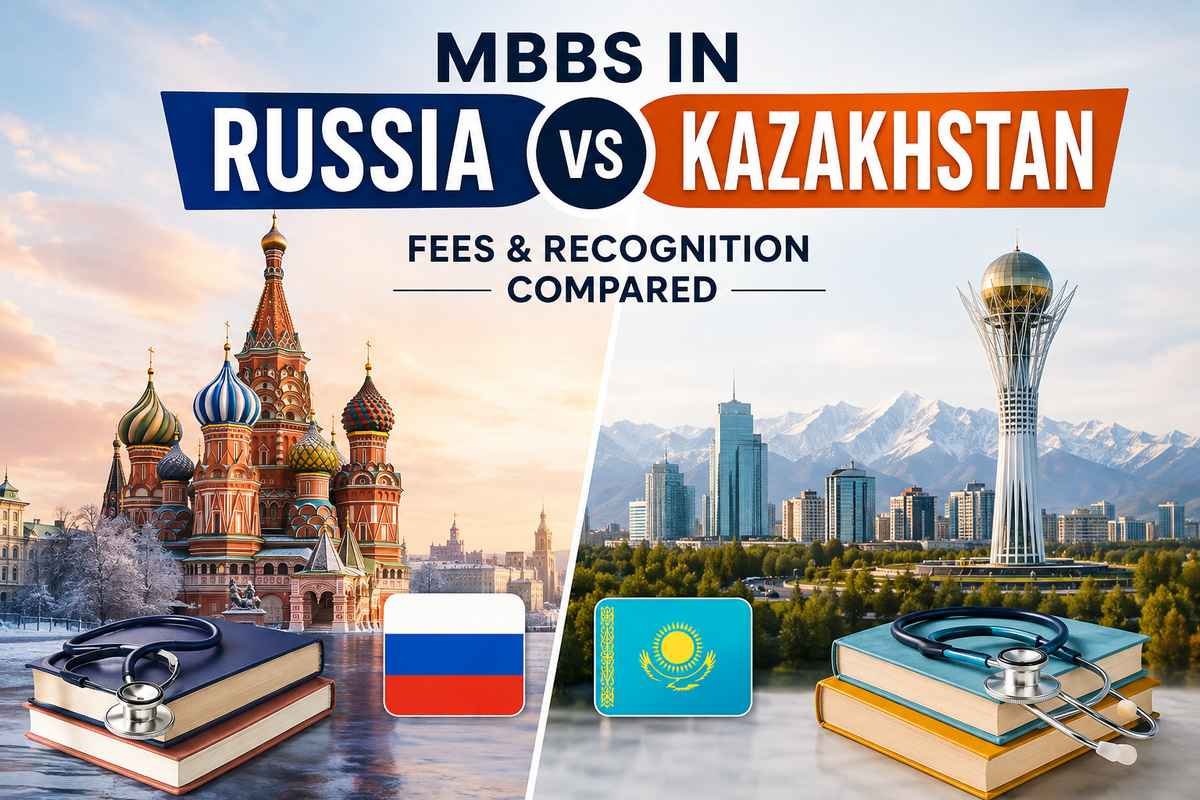
After Georgia, the second most common comparison Indian students make when researching affordable MBBS destinations is between Russia and Kazakhstan. Both countries offer NMC-recognized medical degrees, English-medium instruction, and significantly lower costs than private medical colleges in India — but they differ in ways that genuinely matter for your final decision.
Kazakhstan, in particular, has grown in popularity in recent years as students look for destinations that combine affordability with closer proximity to India, leading to more direct comparisons with the traditionally more established Russian option.
In this guide, we compare MBBS in Russia vs Kazakhstan across fees, recognition, climate, admission, and career outcomes, so you can choose the destination that fits your priorities. At DoctorBano, this is one of the most frequent questions we help students work through during counselling.
Quick Comparison Table
| Factor | MBBS in Russia | MBBS in Kazakhstan |
|---|---|---|
| Average Total Fees | ₹15–40 Lakhs | ₹20–35 Lakhs |
| Course Duration | 6 Years | 5–6 Years |
| Medium of Instruction | English | English |
| NMC & WHO Recognition | Yes (60+ universities) | Yes (select universities) |
| NEET Requirement | Mandatory | Mandatory |
| IELTS/TOEFL | Not Required | Not Required |
| Climate | Cold, harsh winters | Cold, continental climate |
| Indian Student Community | Very Large | Moderate to Large |
| Distance from India | Farther | Closer (shorter flight time) |
| Cost of Living | ₹12,000–20,000/month | ₹12,000–18,000/month |
Both destinations are legitimate, well-established options — the right choice depends on which factors matter most to you.
1. Fees Comparison
Russia typically costs ₹15–40 Lakhs for the complete 6-year program, with government universities on the more affordable end. Tuition generally runs ₹2.5–6 Lakhs per year depending on city and university.
Kazakhstan usually falls between ₹20–35 Lakhs. While the lower end can be competitive with Russia, the average tends to run slightly higher, particularly in Almaty, which has a higher cost of living than many Russian university cities.
Verdict: Russia offers a wider range of budget-friendly options, especially through government universities in Kazan, Volgograd, and Tver. Kazakhstan remains competitive but doesn't quite match Russia's lower-end pricing at most institutions.
2. Recognition and NMC Approval
Russia has more than 60 NMC-approved medical universities, giving students wide selection across cities and fee brackets.
Kazakhstan has a smaller but credible list of NMC-approved universities, including Kazakh National Medical University and Al-Farabi Kazakh National University. The number of approved options is more limited compared to Russia, but the universities that are approved generally maintain strong academic reputations.
Verdict: Russia's larger pool offers more choice and flexibility; Kazakhstan offers a smaller, more curated list of established institutions.
3. Distance and Travel Convenience
Kazakhstan is geographically closer to India, with direct flights from Delhi to Almaty taking roughly 4–5 hours. This makes it significantly easier and cheaper for students to travel home during breaks and for parents to visit if needed, which can matter a great deal for families who prefer to stay closely connected.
Russia, particularly cities like Kazan or Ufa, generally requires longer flights and often layovers, making trips home more expensive and time-consuming, especially during the academic year when time off is limited.
Verdict: If frequent travel matters to your family, Kazakhstan's proximity is a genuine advantage worth weighing against Russia's other strengths.
4. Climate Comparison
Russia's climate varies significantly by city — Sevastopol offers relatively milder winters, while Kazan and Ufa see harsh sub-zero winters that can catch first-year students off guard.
Kazakhstan also has a continental climate with cold winters, particularly in Almaty, though generally somewhat less extreme than Russia's coldest university towns.
Verdict: Both require adjusting to genuinely cold winters; specific city choice matters more than the country overall when it comes to comfort.
5. Indian Student Community
Russia has hosted Indian medical students for decades, resulting in large, established communities in Kazan, Moscow, Volgograd, and Ufa, with easy access to Indian mess facilities and grocery stores.
Kazakhstan's community, while smaller overall, is substantial in Almaty and continues to grow.
Verdict: Russia currently has a more mature, larger-scale support ecosystem, though Kazakhstan's community is expanding.
6. Admission, Visa, and Career Outcomes
Both countries follow a similar admission structure: NEET qualification, document submission, an invitation letter from the university, and a student visa application. Russia's visa process typically takes 4–6 weeks from document submission to approval; Kazakhstan's is comparable in timeline, with some students reporting a marginally smoother experience due to fewer bureaucratic layers at certain universities.
Graduates from either country must clear FMGE/NExT to practice in India — this requirement is identical regardless of country and doesn't change based on which destination you choose. Both also open doors to international licensing exams like USMLE (USA) and PLAB (UK), giving graduates flexibility beyond just practicing in India. Russia's larger, longer-established alumni base offers slightly more accessible mentorship and FMGE preparation resources tailored specifically to Russian MBBS graduates, while Kazakhstan's network, though smaller, is steadily growing as more students choose the country each year.
Verdict: Career outcomes are broadly similar, provided you choose an NMC-approved university and prepare seriously for FMGE/NExT well before graduation.
7. Cost of Living and Safety
Monthly living costs are broadly similar: ₹12,000–20,000 in Russia versus ₹12,000–18,000 in Kazakhstan, covering hostel accommodation, food, local transport, and personal expenses in both cases. Cities with large Indian communities, such as Kazan and Volgograd, often allow students to keep costs toward the lower end due to accessible Indian grocery stores and mess services, while Almaty can run slightly higher than smaller Russian university towns.
Both countries maintain comparable safety standards, with CCTV-monitored hostels, separate accommodation for male and female students, dedicated international student departments, and structured emergency support systems. Kazakhstan's more compact university cities can feel easier to navigate for some students, while Russia's larger cities offer more extensive infrastructure and amenities overall.
So, Which Should You Choose?
- Choose Russia if: You want the widest selection of NMC-approved universities, the lowest possible tuition fees, and a large, well-established Indian student community.
- Choose Kazakhstan if: You prioritize shorter, more affordable travel between India and your university, and you're comfortable with a slightly higher overall budget.
Both destinations offer legitimate, NMC-recognized pathways to becoming a doctor, with thousands of Indian students successfully completing their MBBS and clearing FMGE/NExT from each country every year.
Frequently Asked Questions
Is Kazakhstan cheaper than Russia for MBBS?
Generally, no — Russia tends to offer slightly lower overall costs, particularly at government-funded universities, though some Kazakhstan universities can be competitively priced.
Which is closer to India — Russia or Kazakhstan?
Kazakhstan is geographically closer, with shorter and more affordable flight options compared to most Russian university cities.
Does Kazakhstan have NMC-approved medical universities?
Yes, though the total number is smaller compared to Russia's 60+ approved institutions.
Which country has a better FMGE pass rate?
Outcomes depend more on the specific university and individual preparation than on the country itself. Both have produced successful FMGE candidates.
Do both countries require NEET for admission?
Yes. NEET qualification is mandatory for Indian students pursuing MBBS in either country, as per NMC guidelines.
Can I switch my choice after starting the application process?
It's best to finalize your country and university before beginning applications, since each has a separate admission and visa procedure. Speak with a counsellor early to avoid delays.
Which country has more affordable flight connectivity from India?
Kazakhstan generally offers shorter flight times and more affordable airfare from major Indian cities, making travel home more convenient compared to most Russian university destinations.
Still Deciding Between Russia and Kazakhstan?
Choosing between two strong options can feel overwhelming when your family's investment and your medical career are on the line. At DoctorBano, our counsellors help you compare universities, fees, and outcomes side by side — so you choose with clarity, not guesswork.
Get free, personalized counselling from DoctorBano experts and take the next confident step toward your MBBS journey.