
 Study MBBS In Armenia
 Study MBBS In Kyrgyzstan
 Study MBBS In China
 Study MBBS In Philippines
 Study MBBS In Ukraine
 Study MBBS In Nepal
 Study MBBS In Russia
 Study MBBS In Kazakhstan
 Study MBBS In Georgia
 Study MBBS In Uzbekistan
 Study MBBS In Bangladesh


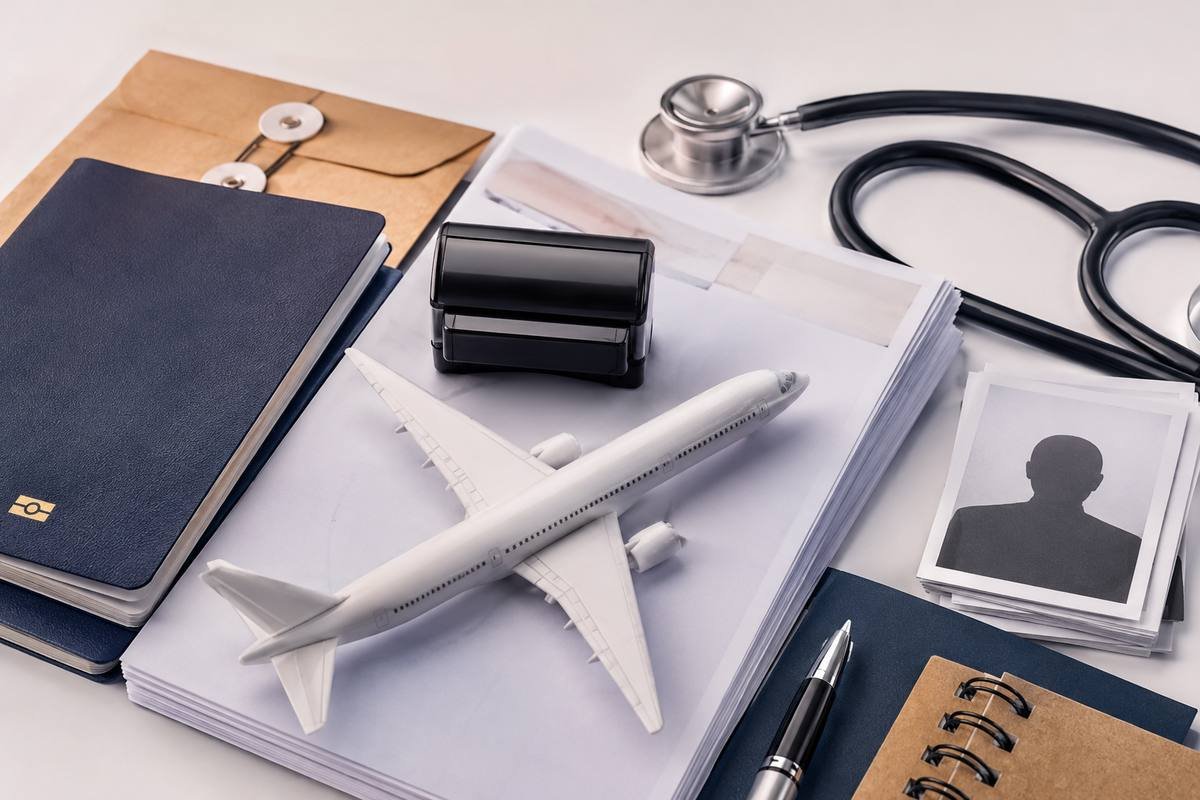
Getting a seat in a foreign medical university is only half the journey. The other half is paperwork. Every year, many students lose time, money or even their admission because of a missing certificate, an expired passport or a wrongly attested document. Knowing the documents required for MBBS abroad before you apply can save you weeks of stress.
This guide explains every document you need, from the first application to your visa and arrival. It also covers apostille, attestation, photographs, translation, common mistakes and a handy timeline. If you are still choosing a country, you can compare options like MBBS in Russia, MBBS in Georgia and MBBS in Kazakhstan before preparing your file.
Why Documentation Matters in MBBS Abroad Admission
Foreign universities, embassies and Indian regulators all verify your records at different stages. A university checks whether you are academically eligible. An embassy checks whether your papers are genuine before issuing a student visa. Later, Indian authorities may verify your eligibility when you apply for the licensing exam after graduation.
Because of this, even a small mistake can cause serious problems:
- A name mismatch between your passport and marksheet can delay your visa.
- A missing NEET scorecard can make you ineligible under NMC rules.
- An unattested certificate can be rejected by the embassy.
- Late submission can make you miss the September intake.
The best approach is to prepare early, keep both original and scanned copies, and follow a checklist.
Quick Checklist of Documents Required for MBBS Abroad
Here is a short list before we go into detail.
- NEET scorecard and admit card
- Class 10 marksheet and certificate
- Class 12 marksheet and passing certificate
- Valid passport
- Passport-size photographs
- Birth certificate
- Medical fitness certificate
- HIV test report (where required)
- Admission or invitation letter from the university
- Apostille or attestation of educational documents
- Police clearance certificate (some countries)
- Visa application documents
- Proof of fee payment
- Parents’ ID proof and financial documents (some embassies)
- Vaccination records (as required)
Not every country asks for every document, so always confirm the latest list for your chosen university.
1. NEET Scorecard and Admit Card
NEET qualification is mandatory for Indian students who want to study MBBS abroad and later practise in India. Keep the following ready:
- NEET UG scorecard (result)
- NEET admit card
- Printed copy of the result from the official NTA website
Some universities also ask for the NEET application confirmation page. Keep multiple copies, as this document is used for the application, the visa and sometimes for eligibility verification later.
Be careful of any agent who promises admission without NEET. As per NMC rules, NEET is required, and ignoring this can put your future licensing at risk.
2. Class 10 Marksheet and Certificate
The Class 10 document is used as proof of date of birth and basic education in many cases. You will need:
- Original marksheet
- Passing certificate (if issued separately)
- Self-attested photocopies
- Clear scanned copies
Make sure your name and date of birth are exactly the same as on your passport. Any difference should be corrected before you start the admission process.
3. Class 12 Marksheet and Passing Certificate
Your Class 12 results prove that you meet the academic eligibility rule of Physics, Chemistry and Biology with the minimum required marks:
- 50% aggregate in PCB for General category
- 40% aggregate in PCB for reserved categories (SC/ST/OBC)
Documents needed:
- Class 12 marksheet
- Passing or board certificate
- Migration certificate, if applicable
- Provisional certificate, if the final one is not yet issued
If your marksheet shows subject names or grades in a way that is hard to read, ask for a clear copy. Embassies and universities prefer sharp, legible scans.
4. Valid Passport
A passport is the most important travel document in your file. Check the following before you apply:
- Validity: It should be valid for at least 18-24 months beyond your planned arrival date, since embassies often require long validity. Many students prefer to renew if it has less than two years left.
- Name accuracy: Your name should match your academic certificates exactly.
- Blank pages: Keep enough empty pages for the visa and stamps.
- Condition: A damaged or torn passport can be rejected.
If you do not have a passport yet, apply immediately. Passport processing can take time, and many students start their admission process but get stuck at this stage.
5. Passport-Size Photographs
Universities, visa offices and hostels all ask for photos. Prepare:
- 10-15 recent passport-size photographs
- White background
- Clear face with no shadows
- Matching the size required by the embassy
Also keep a digital copy, since some portals ask for photo uploads in specific dimensions. Many applicants forget this small requirement and have to rush at the last minute.
6. Birth Certificate
A birth certificate is requested by several universities and embassies as an additional proof of age. It also helps confirm that you meet the minimum age requirement of 17 years on or before 31 December of the admission year.
If your birth certificate is old, handwritten or in a regional language, you may need a translation or a fresh certified copy. Check this early so you are not delayed later.
7. Medical Fitness Certificate
Most universities and many embassies require proof that you are physically and mentally fit to study abroad. This certificate is usually issued by a registered doctor or an authorised hospital. It generally includes:
- General health examination
- Basic tests as required
- Doctor’s signature and stamp
- Date of examination
Some countries ask for a specific format, so wait for the university or consultant to share it before you get it done. Medical certificates also have a limited validity period, so avoid getting them too early.
8. HIV Test Report and Other Health Reports
A number of countries require an HIV test report as part of the student visa process. Depending on the country, you may also need:
- Chest X-ray report
- Blood group report
- Other lab reports as requested
Test reports usually need to be from a recognised lab and may have to be recent, often within a few months. Confirm the accepted lab type and validity period before getting the tests.
9. Vaccination Records
Some universities and countries ask for proof of certain vaccinations. Commonly requested ones can include childhood vaccination records and other vaccines depending on local health rules. Check your destination’s current requirements and consult a doctor if you are unsure.
10. University Admission or Invitation Letter
After your application is approved, the university issues an official admission letter. In many countries, this is followed by an invitation letter or approval from the immigration authority, which is used to apply for the visa.
You should receive:
- Official admission letter on the university letterhead
- Invitation or visa support letter (where applicable)
- Fee structure document
- Payment receipts in the university’s name
Keep these safe, because they are the base for your visa application. Never pay fees without a written confirmation and a proper receipt.
11. Apostille and Attestation of Documents
This is the step that confuses most students. Foreign authorities often want proof that your Indian documents are genuine. This is done through attestation or apostille, depending on the country.
What Is an Apostille?
An apostille is a certificate that verifies an official document so it can be accepted in countries that accept this system. Documents like educational certificates are commonly apostilled through the authorised government channel in India.
Which Documents Usually Need It?
- Class 12 certificate
- Sometimes Class 10 certificate
- Birth certificate
- Police clearance certificate (where required)
Important Points
- Rules differ by country. Some require apostille, some require embassy attestation or different verification.
- Educational documents often need verification at the state level first, followed by the central authority.
- Processing time can be several days to a few weeks, so start early.
- Do not make payments to unverified agents promising instant apostille.
Always ask your consultant or university which format your destination country accepts and how long it takes.
12. Translation of Documents
If a document is not in English, or if the destination country requires its own language, you may need a certified translation. This usually applies to:
- Birth certificates
- Regional language certificates
- Police clearance certificates
- Other documents as requested by the embassy
Translations should be done by an authorised translator and sometimes notarised. Keep both the original and the translated copy together.
13. Police Clearance Certificate
Some countries ask for a police clearance certificate (PCC) to confirm that the applicant has no criminal record. If this is required for your destination, apply early because verification can take time. It may also need apostille or attestation later.
14. Visa Application Documents
After the admission letter is issued, you apply for a student visa. Typical documents include:
- Completed visa application form
- Valid passport
- Admission and invitation letters
- Passport-size photographs
- Medical and HIV reports (where required)
- Proof of fee payment
- Educational documents (attested or apostilled)
- Visa fee payment receipt
Embassy requirements can change. Some may ask for additional items such as travel insurance or proof of accommodation, so always check the latest list on the official embassy website.
15. Financial and Parent Documents
Depending on the country, the embassy or university may ask for proof that you can afford the course. This can include:
- Parents’ ID proof (Aadhaar, PAN)
- Bank statements
- Income proof
- Sponsorship or financial affidavit
If you plan to use an education loan, keep the sanction letter ready. You can also read our guide on education loan for MBBS abroad to understand the process.
16. Documents to Carry When You Travel
Before departure, create a file with both original and photocopied documents. Carry the originals in your hand baggage, not in checked luggage. Your travel file should include:
- Passport with visa
- Admission letter
- Original educational certificates
- NEET scorecard
- Medical and vaccination records
- Passport photos
- University contact details
- Accommodation details and airport pickup information
- Emergency contact numbers
- Travel insurance (if applicable)
Also email scanned copies of everything to yourself and a family member. If you lose a document abroad, having digital copies makes replacement easier.
Country-Wise Differences in Documentation
Documentation rules vary from country to country. Here are general trends to keep in mind:
- Russia: Admission letter, invitation letter, medical certificate and HIV report are commonly required. See details on our Russia page.
- Kazakhstan: Educational documents, passport, medical certificate and visa documents are standard. See our Kazakhstan page.
- Georgia: Apostilled documents and clear financial proof may be important. See the Georgia page.
- Uzbekistan and Kyrgyzstan: Similar basic documentation with country-specific visa steps.
- Bangladesh: Documents often include academic papers, NEET and visa items processed through the Bangladesh mission.
These are general patterns, not official rules. Always verify with the university or embassy before submitting.
Suggested Timeline for Document Preparation
Starting early is the secret to a stress-free admission.
| Time Before Departure | What to Do |
|---|---|
| 5-6 months | Check passport validity; renew if needed |
| 4-5 months | Collect marksheets, birth certificate and NEET result |
| 3-4 months | Start apostille or attestation process |
| 3 months | Apply to the shortlisted universities |
| 2 months | Receive admission letter; complete medical tests |
| 1-2 months | Apply for the student visa |
| 2-4 weeks | Book tickets, arrange forex and pack documents |
This timeline can vary, so treat it as a rough guide.
Common Documentation Mistakes to Avoid
- Name mismatch. A spelling difference between your passport and certificates can cause visa rejection or delay.
- Expired or short-validity passport. Renew early rather than risk a last-minute issue.
- Blurry scans. Upload clear, readable copies.
- Skipping attestation. Unverified documents may be rejected.
- Ignoring validity dates. Medical reports and certain certificates expire.
- Paying without receipts. Always ask for official proof of payment.
- Trusting unverified agents. Choose a consultant with a physical office and transparent process.
- Not keeping backups. Always maintain multiple physical and digital copies.
How a Good Consultant Helps With Paperwork
A reliable consultant does not just collect documents. They guide you on the right format, check for errors, coordinate with the university and track your visa progress. They should also be clear about the fee, the process and the rules. At DoctorBano, students get step-by-step support for documentation, admission letters, visa guidance and pre-departure preparation. You can read more on our admission page.
Frequently Asked Questions
What are the main documents required for MBBS abroad?
The main documents are the NEET scorecard, Class 10 and 12 marksheets, a valid passport, photographs, medical fitness certificate, admission letter and visa documents. Some countries also need apostilled certificates and a police clearance certificate.
Is NEET scorecard compulsory for MBBS abroad?
Yes. Indian students need to qualify NEET to study MBBS abroad and later practise in India.
What is an apostille and is it required?
An apostille is an official verification of a document so it can be accepted abroad. Whether it is required depends on the destination country and the specific document.
How long does the apostille process take?
It can take from several days to a few weeks, depending on the document and the authority. Start early to avoid delays.
How long should my passport be valid?
Many embassies prefer validity of at least 18-24 months beyond your travel date. Check your destination’s rules.
Do I need an HIV test report?
Many countries ask for it as part of the visa process. Confirm the requirement and accepted format with the embassy or university.
Can I apply if my Class 12 result is awaited?
Some universities accept provisional documents for initial application, but the final marksheet must be submitted later. Confirm this with the university.
What should I carry while travelling?
Carry your passport, visa, admission letter, original certificates, NEET scorecard, medical records and photographs in your hand baggage, along with photocopies.
Final Thoughts
Preparing your documents required for MBBS abroad is not difficult if you start early and follow a clear checklist. Check your passport first, collect your academic records, finish attestation or apostille on time and keep every receipt and letter safe. A small mistake in paperwork can cost you a year, but good preparation can make your admission and visa process smooth and stress-free.
Need help with documents, admission or visa guidance? Book a free counselling session with DoctorBano or call +91 8447730303 for step-by-step support.